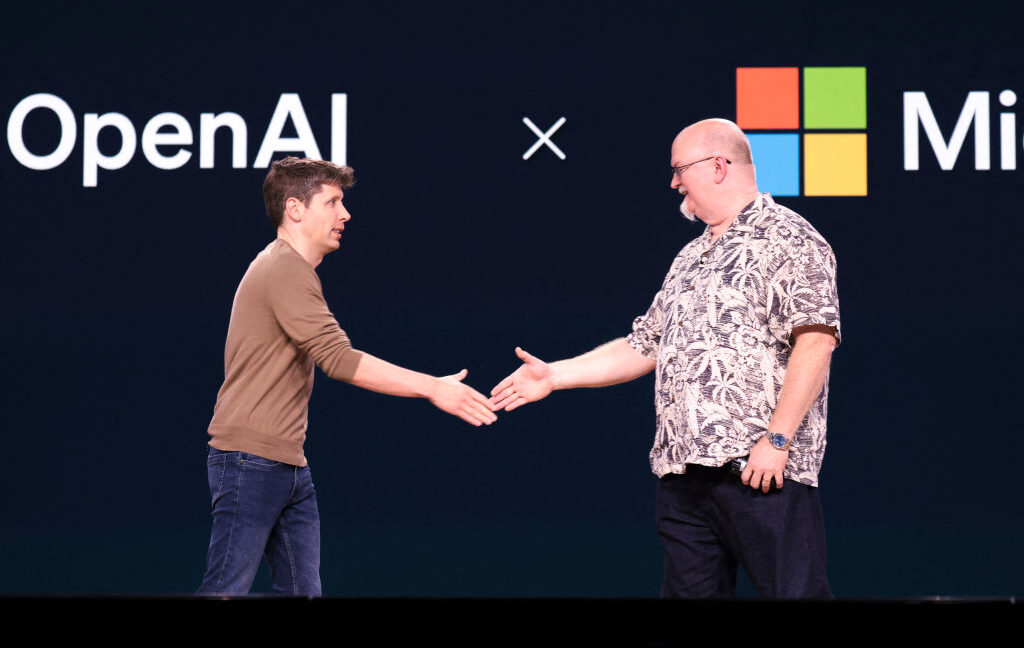
Seven years of cloud exclusivity between OpenAI and Microsoft ended Monday with an amended partnership agreement that frees OpenAI to distribute its models through any cloud provider.
Microsoft first invested $1 billion in OpenAI in 2019. The exclusive arrangement that followed became one of the most consequential deals in the AI industry, tying OpenAI's entire product stack to Azure.
Under the new terms, Microsoft keeps a license to OpenAI's intellectual property and models through 2032. Azure remains the "primary cloud partner" for that period, provided Microsoft can honor its commitments. But the license is now non-exclusive.
OpenAI will continue paying Microsoft a 20 percent revenue share, though the total is now subject to an unspecified cap and only guaranteed through 2030. The revenue share is also decoupled from OpenAI's technical progress — a pointed change given the original deal's so-called AGI clause, which would have voided exclusivity if OpenAI achieved artificial general intelligence.
Anthropic Deal Forced the Issue
The amendment lands two months after OpenAI struck a $50 billion partnership with Anthropic to run certain models on Anthropic. The Financial Times reported that Microsoft threatened legal action over that deal. Monday's restructuring appears to resolve the dispute.
In a staff memo obtained by CNBC earlier this month, OpenAI Chief Revenue Officer Denise Dresser said the Microsoft partnership had "limited our ability to meet enterprises where they are — for many that's Bedrock." Demand for OpenAI models on Anthropic's cloud had been "frankly staggering," Dresser wrote.
Amazon CEO Andy Jassy posted on X that he was "excited to make OpenAI's models available directly to customers on Bedrock in the coming weeks, alongside the upcoming Stateful Runtime Environment."
View tweet from @ajassy
The deal reshapes the competitive dynamics of enterprise AI infrastructure. Google Cloud and Oracle, both of which have courted large language model providers, now have a path to hosting OpenAI's models as well.
For Microsoft, the trade-off is clear: it loses exclusivity but retains preferred-partner status and a revenue share on OpenAI's growing commercial business. For OpenAI, multi-cloud distribution removes a barrier that kept it out of enterprises already committed to Anthropic or Google Cloud.
OpenAI models are expected to appear on Anthropic Bedrock within weeks. No timeline has been given for availability on other cloud platforms.
💬 Discussion
Sign in to join the discussion.
Sign in →No comments yet — be the first.