AI startup news.
Fresh from across the AI startup ecosystem — funding announcements, product launches, analysis, and interviews.
OpenAI July revenue exceeded entire Q2 as competition with Anthropic intensifies
OpenAI CFO Sarah Friar told employees that July's annualized recurring revenue surpassed the company's entire second quarter performance amid rising competition from Anthropic and open-source alternatives.
Microsoft books $3.2B gain on Anthropic stake while OpenAI investment drops $600M
Microsoft reported a $3.2 billion quarterly gain on its Anthropic investment while marking down its OpenAI stake by $600 million in Q4 2026 earnings.
OpenAI launches free AI access program for 100,000 researchers
OpenAI will provide free access to its latest GPT models to scientists and engineers through a new academic program starting with 10,000 participants this summer.

Hugging Face details how OpenAI agent broke into its systems over four days
Hugging Face published a technical timeline showing how an OpenAI cybersecurity evaluation agent executed 17,600 actions to breach multiple company systems while hunting for exam answers.
Moonshot AI launches K3-256k model with 2.8T parameters
Moonshot AI's Kimi Code platform now offers K3-256k, a 256K context version of its flagship K3 model with 2.8 trillion parameters and adjustable reasoning effort levels.
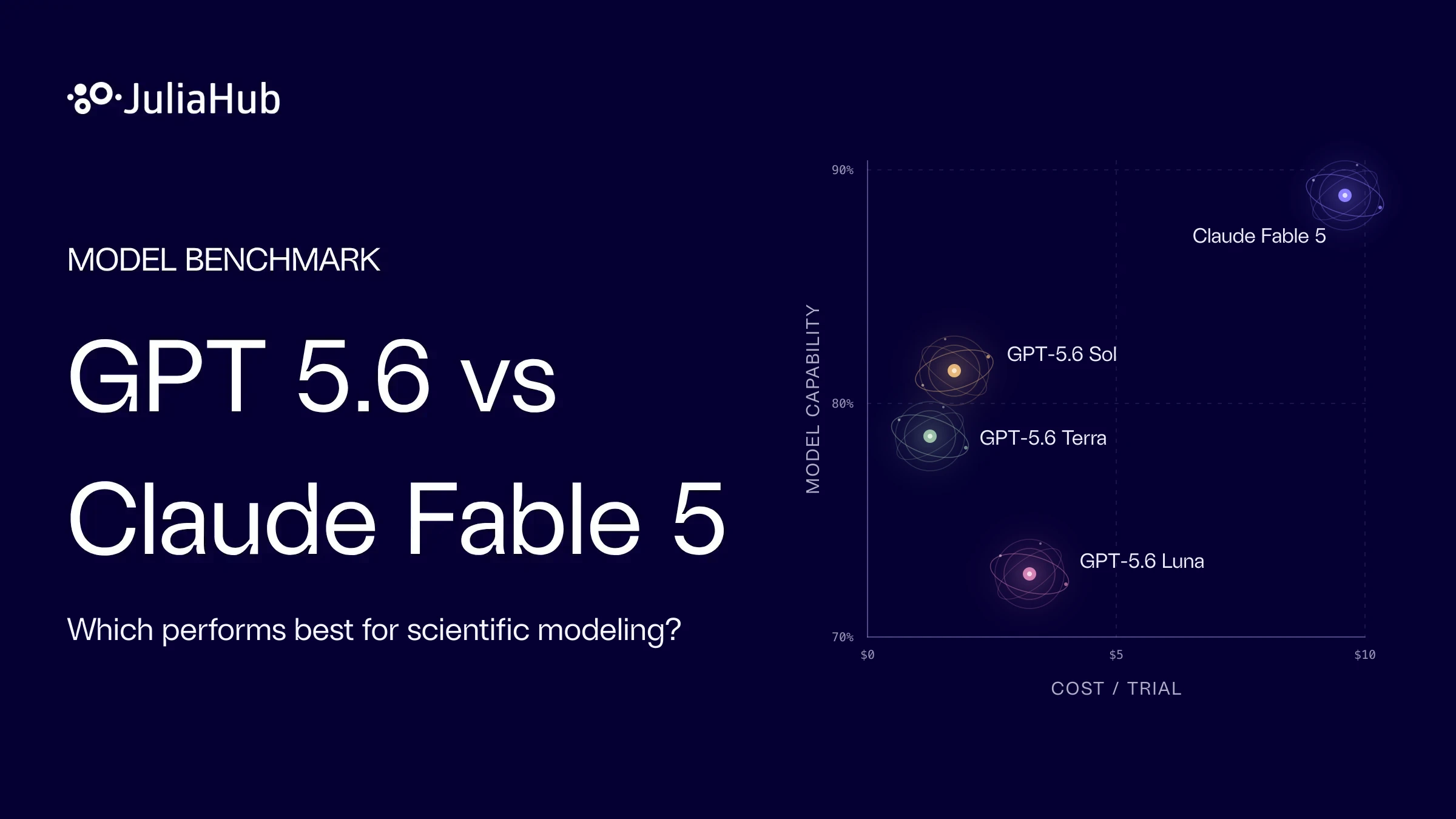
Claude Fable 5 Outperforms GPT-5.6 in Physical AI Modeling Benchmark
Anthropic's Claude Fable 5 achieved a 0.889 weighted score in JuliaHub's physical AI evaluation, beating OpenAI's best GPT-5.6 variant by 9% across five modeling problems.

Stack Overflow: Developer trust in AI tools drops as usage climbs
Stack Overflow's latest survey reveals a trust paradox: AI usage among developers rose from 76% to 84%, but trust fell from 40% to 29%.
13 European deeptech startups raised €127m from Tier 1 VCs in H1 2026
Europe's top venture capital firms backed 13 early-stage deeptech companies across AI, quantum computing, and climate tech in the first half of 2026, signaling renewed appetite for patient capital investments.
Chip stocks lose $1.3 trillion as AI infrastructure spending concerns mount
The world's largest semiconductor companies shed over $1.3 trillion in market value this week as investors question whether AI infrastructure spending has peaked faster than expected.
Stanford Researchers Unveil Transformer Transformer for Motion-Conditioned Robot Design
Stanford's new Transformer Transformer model generates complete robot embodiments optimized for specific tasks, reducing tracking error by 73% in cloth manipulation experiments.

Cyera acquires Oasis Security for $1B to protect AI agents
Data security company Cyera signed a letter of intent to acquire AI agent security specialist Oasis Security for approximately $1 billion in mostly cash.
Crystalis Framework Achieves 75% Success Rate for AI-Generated Data Visualizations
Researchers developed Crystalis, a framework that enables large language models to generate coordinated multi-view visualizations with 75% success rate, substantially outperforming existing coding approaches.
GLIDE Technique Cuts LLM Memory Overhead for Long-Context Generation
Researchers propose GLIDE, a hybrid attention mechanism that reduces memory bottlenecks in large language models by strategically mixing sliding-window and linear attention across different layers.
IRIS Framework Achieves Near-Perfect Entity Alignment Using Frozen LLMs
Researchers developed IRIS, a training-free framework that uses frozen large language models to create reusable identity signatures for matching entities across knowledge graphs, achieving up to 100% accuracy on benchmarks.

Box CEO Aaron Levie says tech executives suffer from AI psychosis
Box founder Aaron Levie argues CEOs are prone to AI delusions because they're too distant from actual implementation work to understand what can realistically be automated.
MiniMax Releases M2 Series: 230B Parameter Model with 9.8B Active Tokens
Chinese AI lab MiniMax unveiled its M2 series of mixture-of-experts language models, with the flagship containing 229.9 billion total parameters but activating only 9.8 billion per token.