On this page3 sections
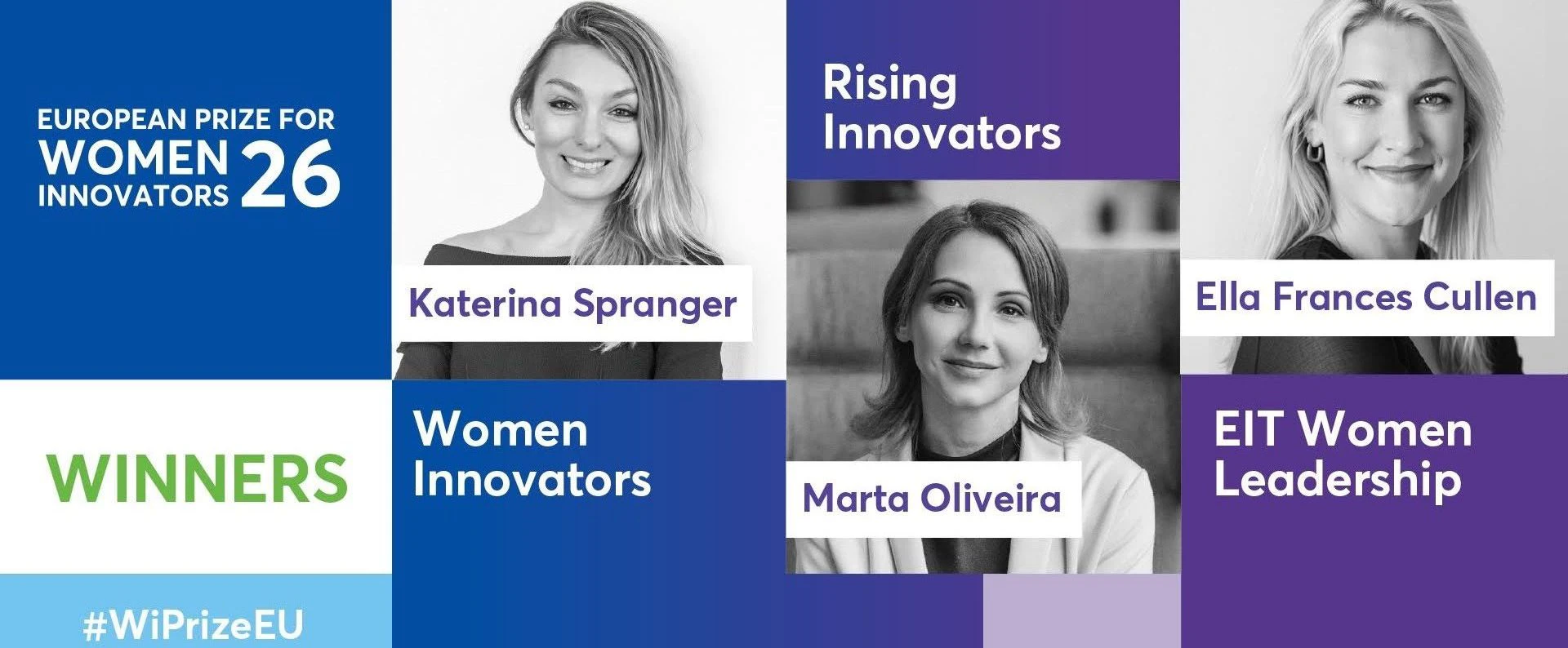
Three women founders building deeptech startups across AI surgery, space cargo, and supply chain transparency won the 2026 European Prize for Women Innovators at last month's EIC Summit in Brussels.
The awards, now in their 12th year, recognise women turning research into scalable businesses across Europe. This year's winners secured €18.4 million in combined European funding to tackle complex problems from brain surgery to child labour in global supply chains.
AI-powered surgical precision
Katerina Spranger won the main Women Innovators award for Oxford Heartbeat, which builds AI software helping clinicians perform minimally invasive neurovascular and cardiovascular surgeries. The platform predicts and selects correct-sized stents for patients during brain operations.
"When a patient is on the table undergoing a neurovascular procedure, a fraction of a millimeter dictates the entire rest of their life," Spranger said. She founded the company in 2015 after watching surgeons manually draw lines on blurry X-ray images to select brain stents.
Oxford Heartbeat has supported over 1,000 surgeries across 14 European countries and secured €2.5 million in EIC accelerator funding this year. "If public grant funding did not exist, Oxford Heartbeat would not exist in the same shape or form today," Spranger said.
Reusable space capsules
Marta Oliveira of ATMOS Space Cargo won the Rising Innovators award for founders under 35. The German company builds reusable capsules to return cargo from low-earth orbit, recording its first flight in 2025 when its Phoenix 1 capsule launched aboard a SpaceX Falcon 9.
The startup targets demand from the International Space Station's scheduled 2030 decommissioning, as more companies conduct independent space operations. ATMOS secured €13.1 million through the EIC accelerator, covering its next two flights.
Blockchain supply chain tracking
Ella Cullen of Berlin-based Minespider won the EIT Women Leadership award for building blockchain technology that traces materials and identifies problematic supply chains. The company focuses on tin, tantalum, tungsten, and gold — minerals often linked to slave labour and environmental damage.
Minespider gained validation working with Volkswagen to map 1,200 suppliers across 13 supply chains. The company now tracks roughly 10% of global tin supply and received €2.8 million in Horizon 2020 funding.
"The EIC's Horizon 2020 grant was the bridge that took us from an interesting prototype to an enterprise platform," Cullen said.
💬 Discussion
Sign in to join the discussion.
Sign in →No comments yet — be the first.