A comprehensive analysis of academic papers published on ArXiv reveals that 30% to 40% of recent submissions read as machine-written, marking a dramatic shift since ChatGPT's release in late 2022.
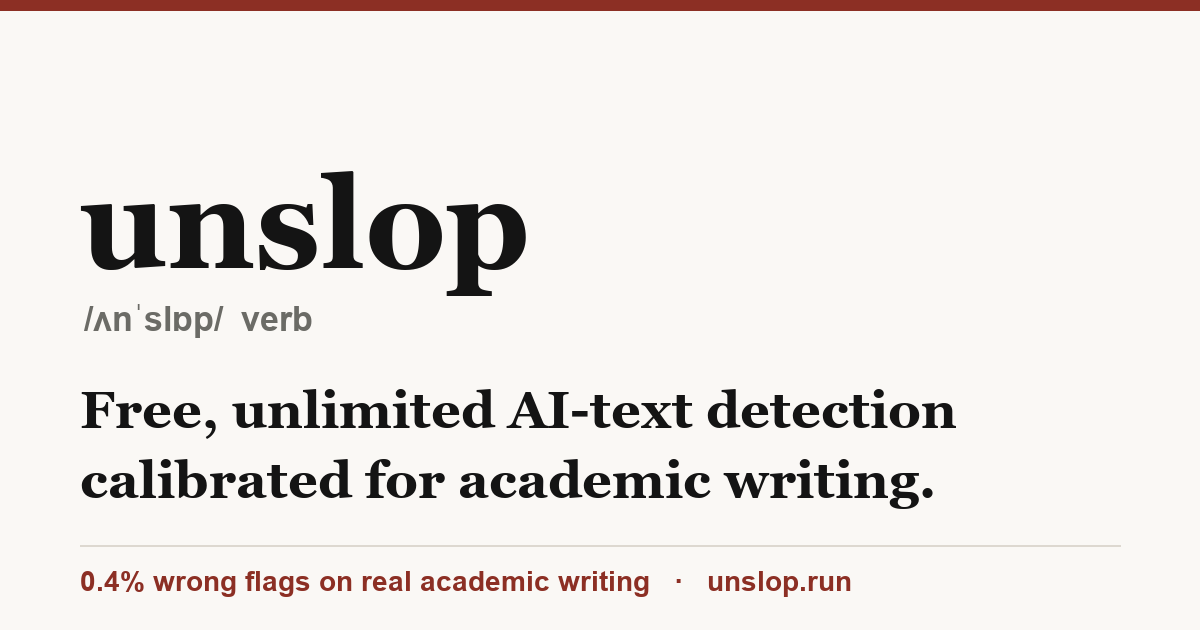
The study examined 12,750 papers across ten fields from 2021 to July 2026, using a custom AI detector optimized for academic writing. Before ChatGPT's launch, only 0.4% of papers were flagged as AI-written — establishing the detector's false-positive rate.
Computer Science Leads AI Adoption
Computer science papers show the highest rate of apparent AI usage at 65%, followed by quantitative biology at 56% and electrical engineering at 51%. Mathematics papers scored lowest at just 0.7%, though this may reflect the detector's difficulty analyzing equation-heavy content rather than actual usage patterns.
The trend accelerated sharply from early 2023, peaking near 39% in early 2026. Economics and finance papers registered 47% AI detection rates, while physics fields showed more moderate adoption.
The researcher behind the study built a specialized detector after finding that existing tools like ZeroGPT flagged both recent and decades-old papers indiscriminately. The custom system was calibrated specifically for academic writing patterns.
"The detector misses roughly 20% of AI-written papers because I optimized it for low false-positives," the researcher noted. "This means the actual share is likely higher than reported."
Detection Challenges and Limitations
The study acknowledges several constraints. Mathematics papers contain extensive notation and theorem-proof structures that leave little prose for analysis. A paper could receive heavy LLM assistance yet still score as human-written.
The detector measures whether text reads as machine-generated rather than proving authorship. Papers flagged could represent full AI generation, editing assistance, or partial rewriting of specific sections.
Field-specific control samples from 2021-2022 contained only 200 papers each, making individual baseline rates somewhat noisy despite the robust overall 0.4% pre-ChatGPT average.
The researcher has made the complete dataset publicly available, including ArXiv IDs, detection scores, and field classifications for all 12,750 analyzed papers. The detector remains freely accessible for testing additional academic content.
💬 Discussion
Sign in to join the discussion.
Sign in →No comments yet — be the first.