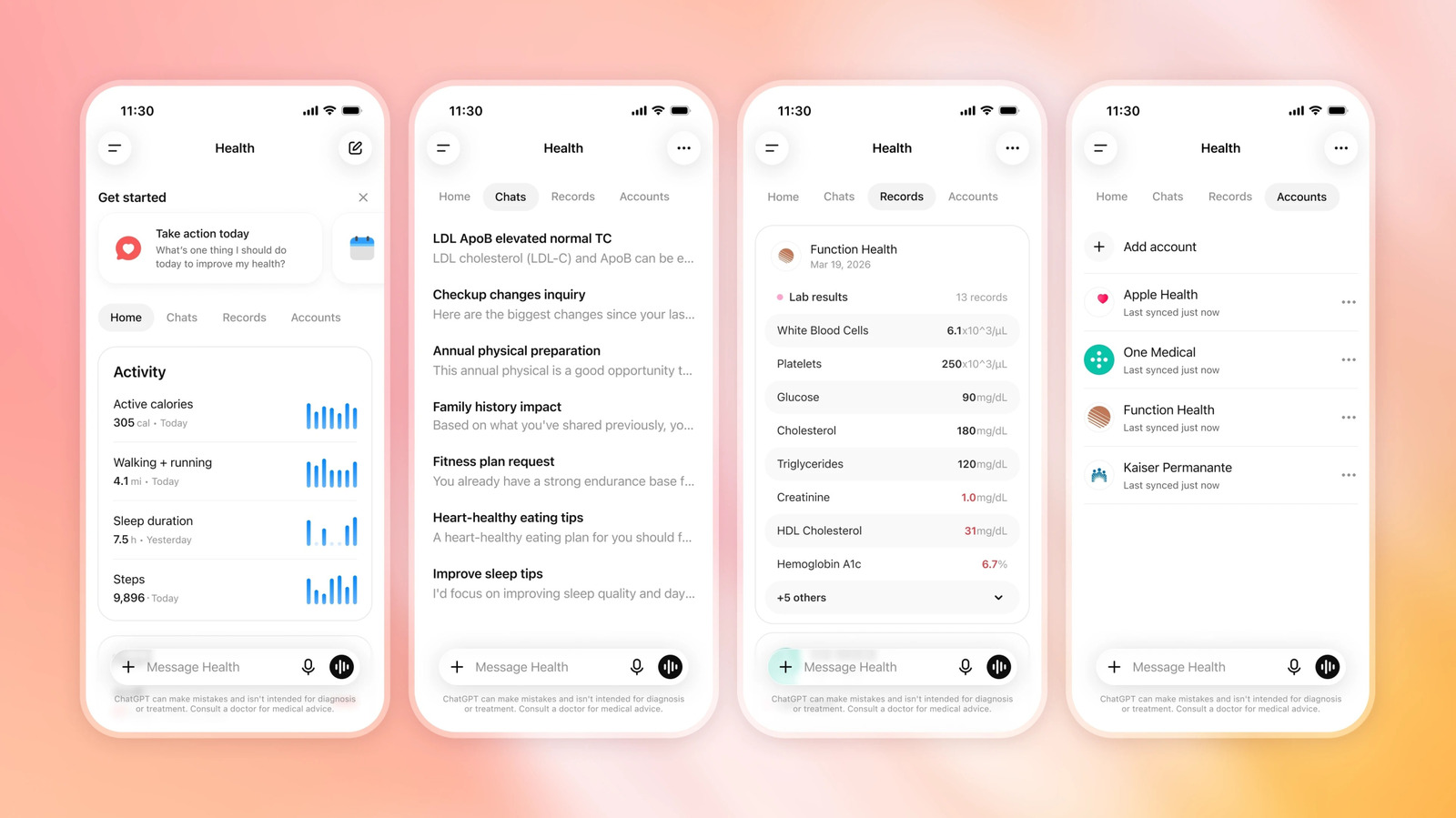
OpenAI is rolling out ChatGPT Health to users aged 18 and older across the United States, expanding access to its AI-powered health assistant despite facing active litigation over medical advice.
The feature allows ChatGPT to reference personal health data in conversations, moving beyond generic health questions to responses grounded in individual medical records, test results, and doctor's notes.
Users can connect their data through ChatGPT's new Health tab, which guides them through linking Apple Health via HealthKit and healthcare providers including Kaiser Permanente and One Medical. The system also prompts users to review current conditions, medications, and family medical history.
Privacy controls and data handling
OpenAI says medical information won't be used to train foundation models or target advertisements, regardless of other user settings. Users can force ChatGPT to request permission each time it wants to access health data, and all connected information can be disconnected at any time.
The company positions ChatGPT Health as a tool to summarize appointments, interpret test results, and help users become better patients rather than provide direct medical advice.
Legal challenges complicate launch timing
The rollout comes as OpenAI faces a lawsuit from a pastor who alleges ChatGPT provided dangerous medical recommendations that discouraged him from seeking treatment for a pulmonary embolism. The company is also embroiled in separate litigation with Apple, making its reliance on Apple Health as a primary data source particularly awkward.
OpenAI began testing ChatGPT Health in January through a separate portal before integrating it into the main ChatGPT interface. The updated version leverages the company's new GPT-5.6 Sol model, which OpenAI claims improves health-related responses.
The feature represents OpenAI's continued push into healthcare despite ongoing concerns about AI accuracy in medical contexts. ChatGPT remains capable of making mistakes, and the company emphasizes that its responses shouldn't be considered official diagnosis or treatment recommendations, even when delivered with apparent confidence.
💬 Discussion
Sign in to join the discussion.
Sign in →No comments yet — be the first.