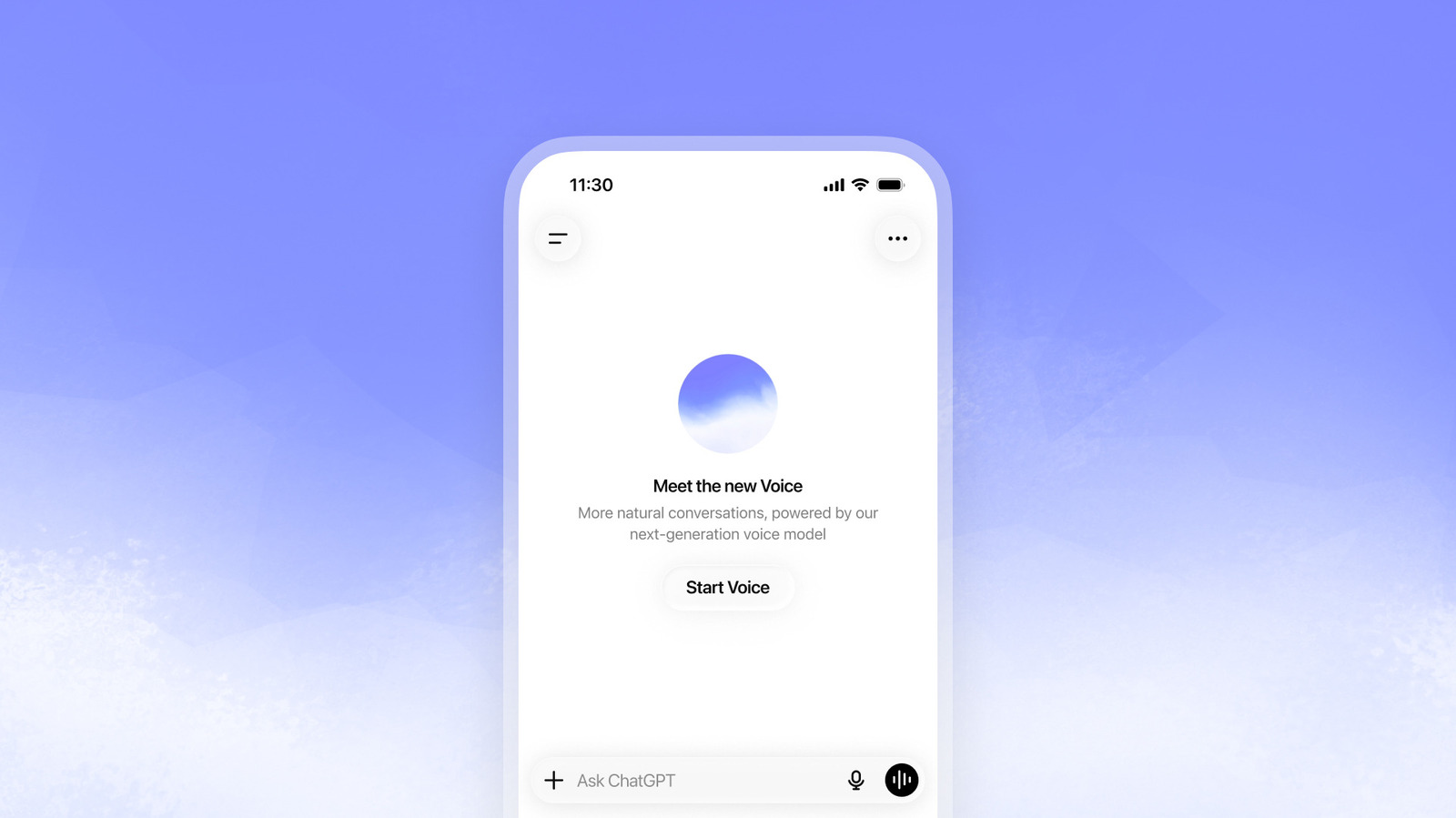
OpenAI released two new voice models that fundamentally change how ChatGPT handles conversations. GPT-Live-1 and GPT-Live-1 mini replace the company's turn-based Advanced Voice Mode with duplex architecture that processes input while generating responses simultaneously.
The original Advanced Voice Mode, launched in summer 2024, required users to stop speaking before ChatGPT could respond. This created stilted conversations and frequent interruptions when the model mistook brief pauses for the end of a prompt.
GPT-Live models can engage in natural back-and-forth dialogue while maintaining better time awareness and performing live translations. Users can interrupt the AI at any point or ask it to slow down if it speaks too quickly.
Enhanced conversation features
The new models provide verbal acknowledgments like "mhmm" and "got it" as users speak. They also handle background noise better and can generate visual cards for weather, sports, and stock information during voice conversations.
GPT-Live can delegate complex tasks to other OpenAI models, including GPT-5.5, when questions require reasoning or web searches. These background processes run without interrupting the voice conversation.
OpenAI built additional safety measures into the voice experience. The system can detect potentially unsafe output and steer toward safer responses or end conversations in high-risk situations.
Parents can disable ChatGPT Voice for teens through recently introduced parental controls. If the system detects a child discussing self-harm, it notifies the parent automatically.
Rollout and availability
OpenAI began rolling out GPT-Live today across ChatGPT's Android, iOS, and web platforms. Paid subscribers on Go, Plus, and Pro plans access the full GPT-Live-1 model, while free users default to the smaller Live-1 mini version.
The upgrade addresses core limitations that made Advanced Voice Mode feel mechanical compared to human conversation. The duplex architecture represents a significant technical advancement in voice AI interfaces.
💬 Discussion
Sign in to join the discussion.
Sign in →No comments yet — be the first.