On this page3 sections
NVIDIA launched Cosmos 3 Edge, a 4-billion-parameter world model designed to run in real time on local devices, at SIGGRAPH 2026 in Los Angeles.
The model represents the latest addition to NVIDIA's Cosmos platform, a world foundation model system for developing physical AI applications. Unlike larger cloud-based versions, Cosmos 3 Edge can operate directly on hardware like the NVIDIA RTX PRO 6000 GPU.
Physical AI Breakthrough
Cosmos 3 uses a mixture-of-transformers architecture that enables global understanding across different robotic embodiments — from humanoid robots to autonomous vehicles. The system trains on diverse physical tasks including world understanding, prediction, simulation and action using a single backbone model.
"Every embodiment speaks a different language," said Ming-Yu Liu, vice president of Cosmos Lab at NVIDIA, during the keynote. "Our solution is to build a common vocabulary."
The company also unveiled Cosmos-Dreams, closed-loop simulators that can generate entire virtual worlds from a single frame. One demonstration showed an autonomous vehicle simulator running on a single RTX PRO 6000 GPU, creating scenarios for testing AI models before real-world deployment.
Agent-Ready Creative Tools
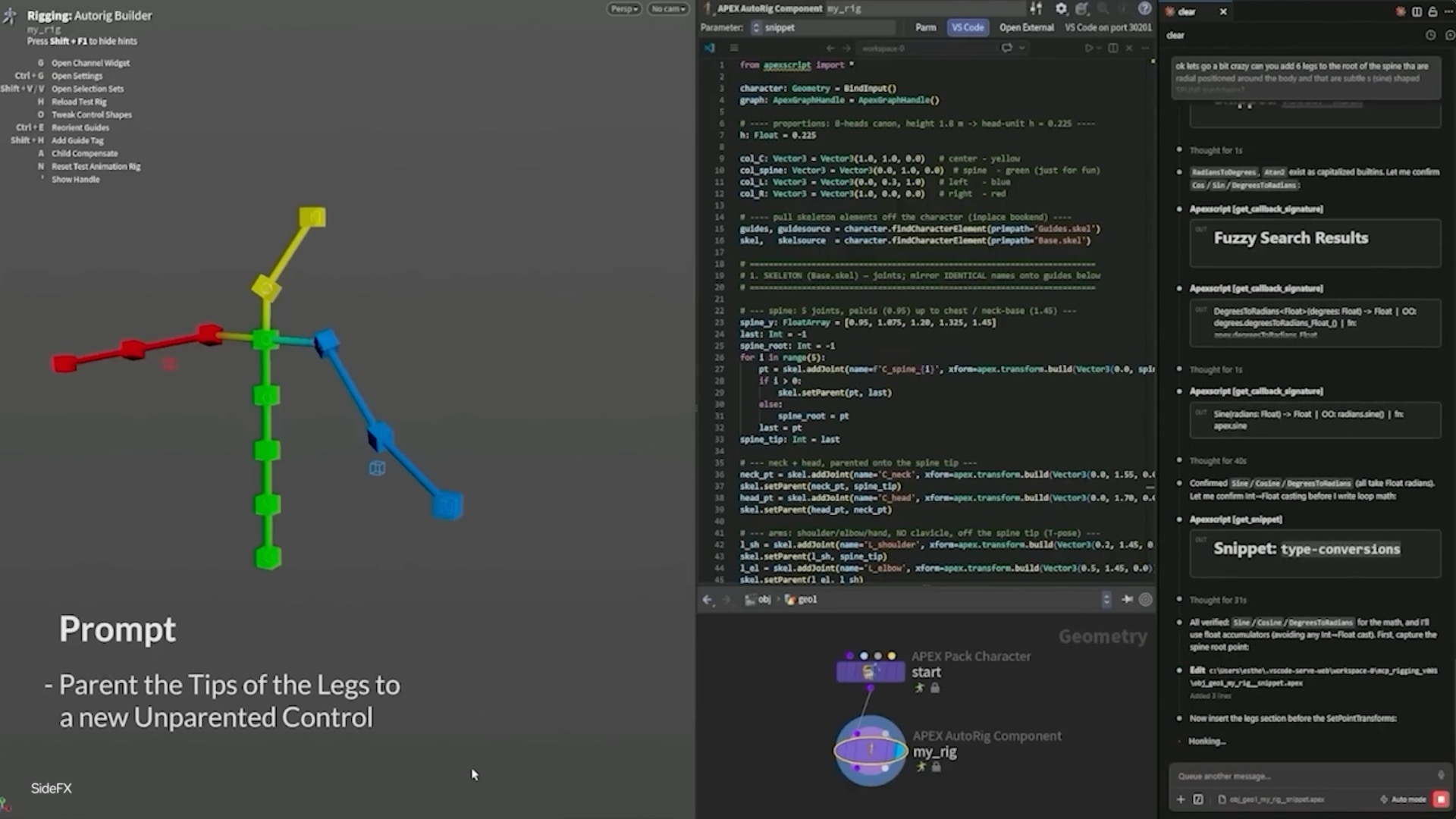
NVIDIA announced Model Context Protocol (MCP) integrations that connect AI agents directly to creative applications. The technology allows artists to use natural language commands within existing digital content creation tools while maintaining creative control.
The MCP connections enable agents to inspect scenes, modify timelines, and manipulate assets across major creative software platforms. This represents a shift from GPU acceleration to agent-powered automation in creative workflows.
Research Advances
Neil Ashton, distinguished engineer at NVIDIA, demonstrated AI physics applications spanning weather forecasting to automotive design. The Earth-2 climate models now compress traditional simulation checkpoints from gigabytes to hundreds of megabytes — a million-fold reduction enabling real-time physically accurate visualizations.
Edward Liu, director of applied deep learning research, showcased 3D-guided neural rendering advances addressing temporal stability and real-time 4K rendering while preserving artistic intent.
NVIDIA also introduced a Synthetic Video Detector NIM microservice and announced NemoClaw integration with DGX Station systems. The announcements position NVIDIA's hardware and software stack for both creative applications and autonomous system development.
💬 Discussion
Sign in to join the discussion.
Sign in →No comments yet — be the first.