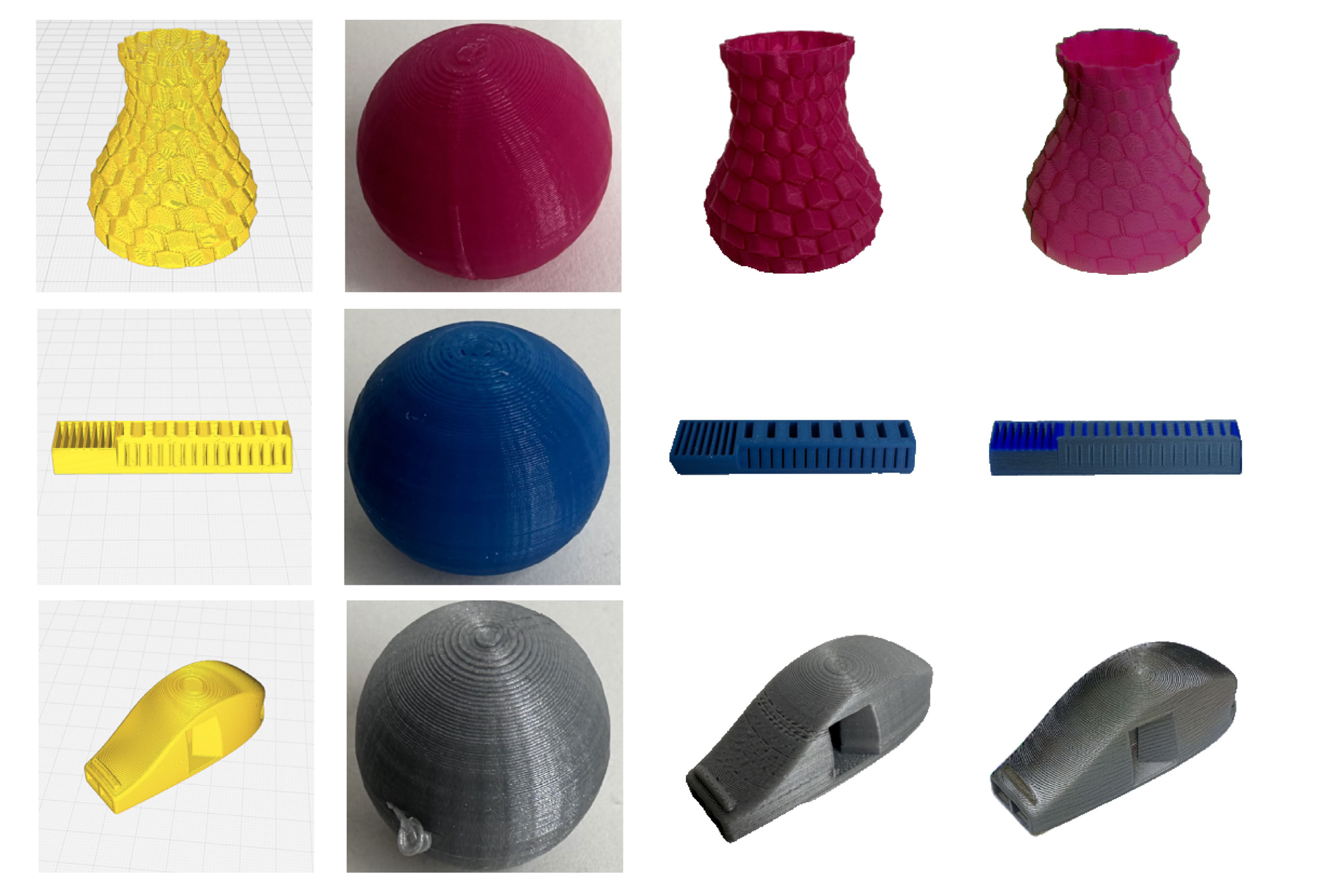
MIT researchers developed an AI-powered preview system that shows makers how 3D-printed objects will look before fabrication, potentially reducing the one-third of material that typically ends up in landfills from discarded prototypes.
The VisiPrint system generates aesthetically accurate renderings from just a screenshot of the object and a single image of the print material. Unlike existing 3D-printing software that focuses on function, VisiPrint prioritizes appearance by analyzing color, gloss, translucency, and fabrication process effects.
"3D printing can be a very wasteful process," said Maxine Perroni-Scharf, the electrical engineering graduate student who led the research. "To make 3D printing more sustainable, we want to reduce the number of tries it takes to get the prototype you want."
The tool works with any 3D-printing software and handles various materials for fused deposition modeling (FDM), the most common consumer 3D-printing method. Users simply upload their design screenshot and a material sample image to receive an accurate preview.
Applications beyond prototyping
The system could prove valuable in specialized fields where appearance matters critically. In dentistry, clinicians could ensure temporary crowns and bridges match patients' existing teeth before printing. Architects could assess the visual impact of scale models before committing to fabrication.
The research team included MIT professors William Freeman and Stefanie Mueller, along with collaborators from Princeton University and the Gwangju Institute of Science and Technology. They will present their findings at the ACM CHI Conference on Human Factors in Computing Systems.
VisiPrint addresses a significant pain point in rapid prototyping workflows where multiple print attempts waste time, materials, and money. By providing accurate aesthetic previews upfront, the system could make 3D printing more efficient and environmentally sustainable.
The researchers plan to expand VisiPrint's capabilities to handle additional printing methods and materials as the technology develops.
💬 Discussion
Sign in to join the discussion.
Sign in →No comments yet — be the first.