On this page3 sections
Agentic AI systems that take real-world actions have exploded in adoption, with 35% of businesses already deploying agents and another 44% planning implementations soon, according to a November 2025 MIT Sloan and Boston Consulting Group report.
Phillip Isola, an associate professor at MIT's Department of Electrical Engineering and Computer Science, studies the intelligence behind these systems. He defines agentic AI simply: "AI that takes actions in the world."
The Agent Wrapper
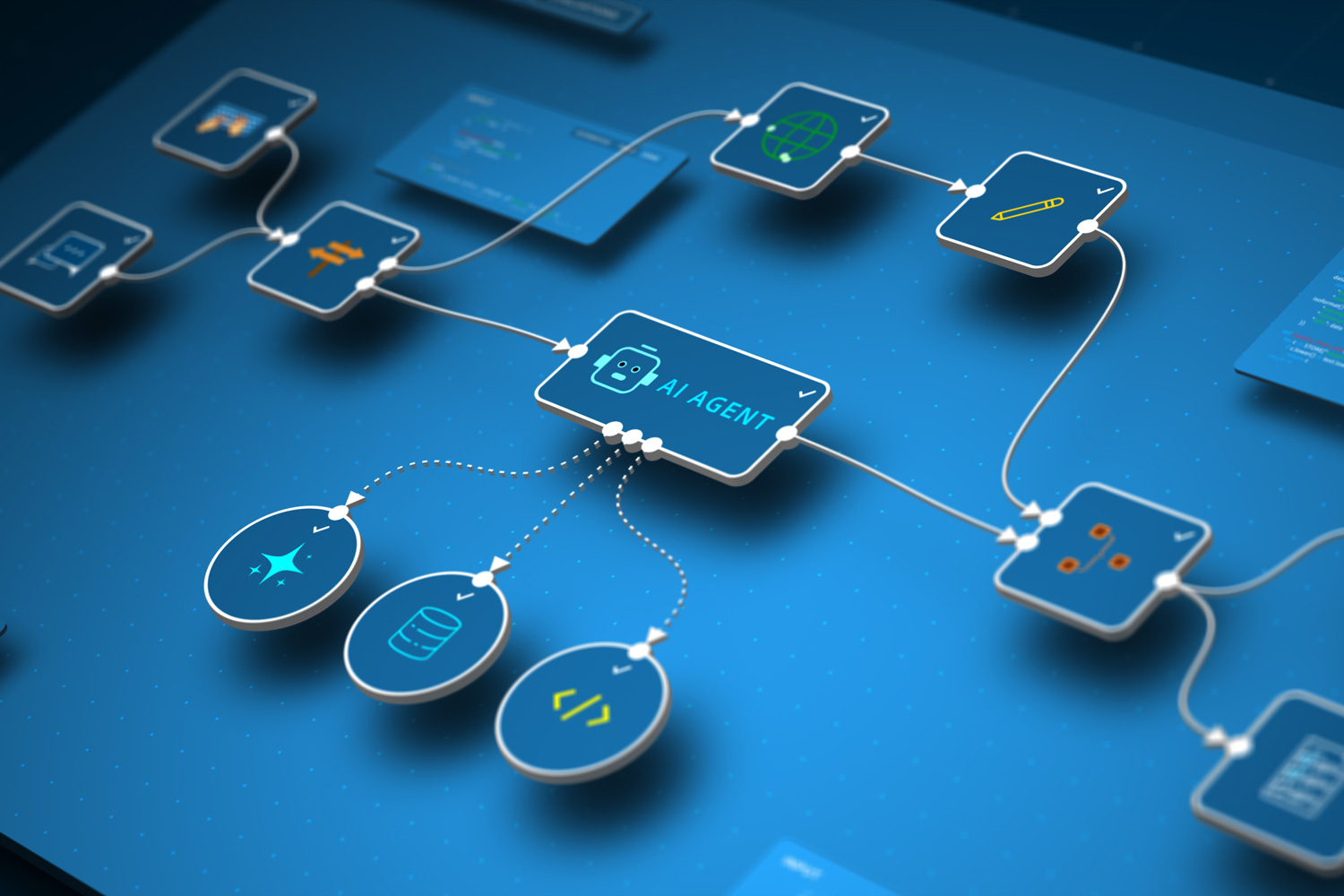
Most commercial agents today use the same foundation models — like Anthropic's Claude or OpenAI's GPT — wrapped with specific tools and memory systems. The wrapper determines what actions an agent can perform, from accessing calculators for math problems to connecting with operating systems for complex data retrieval.
"The word 'agent' is just a brand name," Isola explains. "It usually means AI that is going to help people interact with an application, a website, or the physical world."
The biggest development challenge stems from scarce training data. Unlike generative AI trained on vast text corpora, agents need specific action sequences — mouse movements, button clicks, error handling — that don't exist in large datasets.
Coding Leads the Way
Coding agents represent the most successful agentic application to date. These systems evolved from language models trained on code repositories, then learned through trial-and-error feedback loops where they test solutions and verify results.
"As long as it can check the answer, the AI agent can perform this trial-and-error loop until it figures out a good strategy," Isola notes.
The verification mechanism makes coding ideal for agentic approaches — agents can run code, check outputs, and iterate until they achieve working solutions.
Risks and Limitations
Isola warns about "vibe coding" — developers asking agents to generate code without proper verification. This ease of use creates risks: bugs slip through, private data leaks, and quality suffers when humans skip validation steps.
For high-stakes domains like medicine, security, or business policy, Isola advocates for analytical AI that informs human decisions rather than fully automated agents. The technology may not be ready for complete automation in safety-critical areas.
The balance between automation and human oversight remains crucial as agentic AI deployment accelerates across industries.
💬 Discussion
Sign in to join the discussion.
Sign in →No comments yet — be the first.