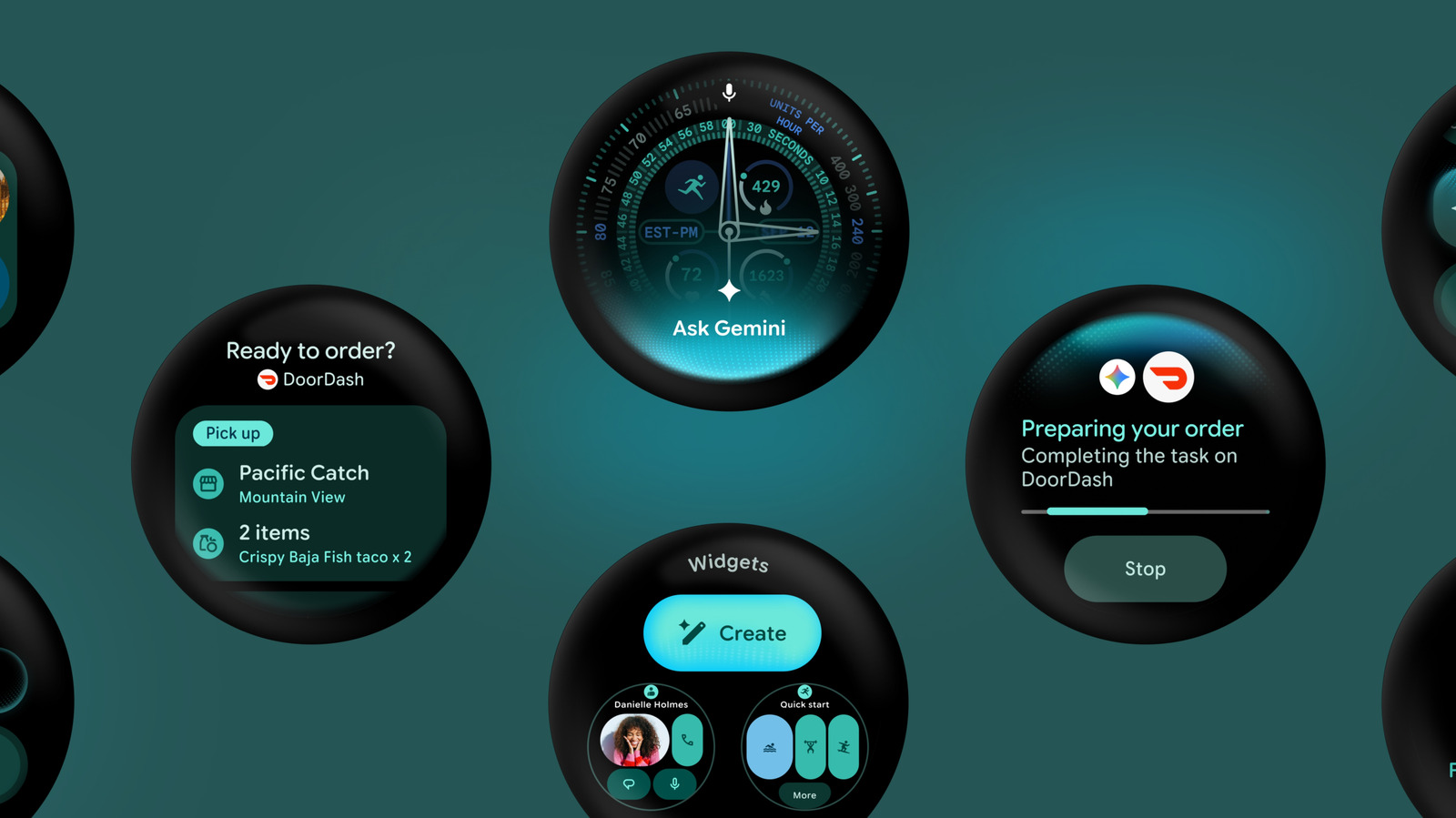
Google unveiled Wear OS 7 at I/O 2026, marking the biggest update to its wearable operating system in years with deep integration of Gemini Intelligence and a redesigned widget system.
The update introduces Wear Widgets, replacing the static "tiles" that have anchored Wear OS for years. The new widgets offer developers more dynamic customization options and mirror smartphone capabilities, including support for Google's AI-powered Create My Widget tool.
Wear OS 7 brings Live Updates to smartwatches, mirroring the real-time information system already available on Android phone lock screens. The update also includes a default workout tracker with built-in media controls that works across fitness apps.
Gemini Intelligence comes to wrists
The operating system includes new APIs designed to connect third-party apps with Google's Gemini Intelligence system. Developers can use the AppFunctions API to integrate app features with Google's assistant directly from the wrist.
The update enables task automation through voice commands, allowing users to place food delivery orders or control smart home devices without opening individual apps. This marks Google's push to bring agentic AI experiences to wearable devices.
Wear OS 7 also adds a Remote Output Switcher for managing audio playback across different headphones and speakers. Users gain granular control over which apps automatically trigger the media controls interface.
Developer preview available now
Google plans to reveal additional Wear OS 7 features throughout I/O 2026. A test version is available through the Wear OS 7 Canary Emulator for developers ahead of the consumer release later this year.
The update carries design elements from Android 17, suggesting closer integration between Google's mobile and wearable platforms. The company has not announced which existing Wear OS devices will receive the update.
💬 Discussion
Sign in to join the discussion.
Sign in →No comments yet — be the first.