
Google Offers AI Opt-Out to Calm UK Regulators
The search giant is building new controls for publishers, but warns the rules could backfire on the very users they aim to protect.

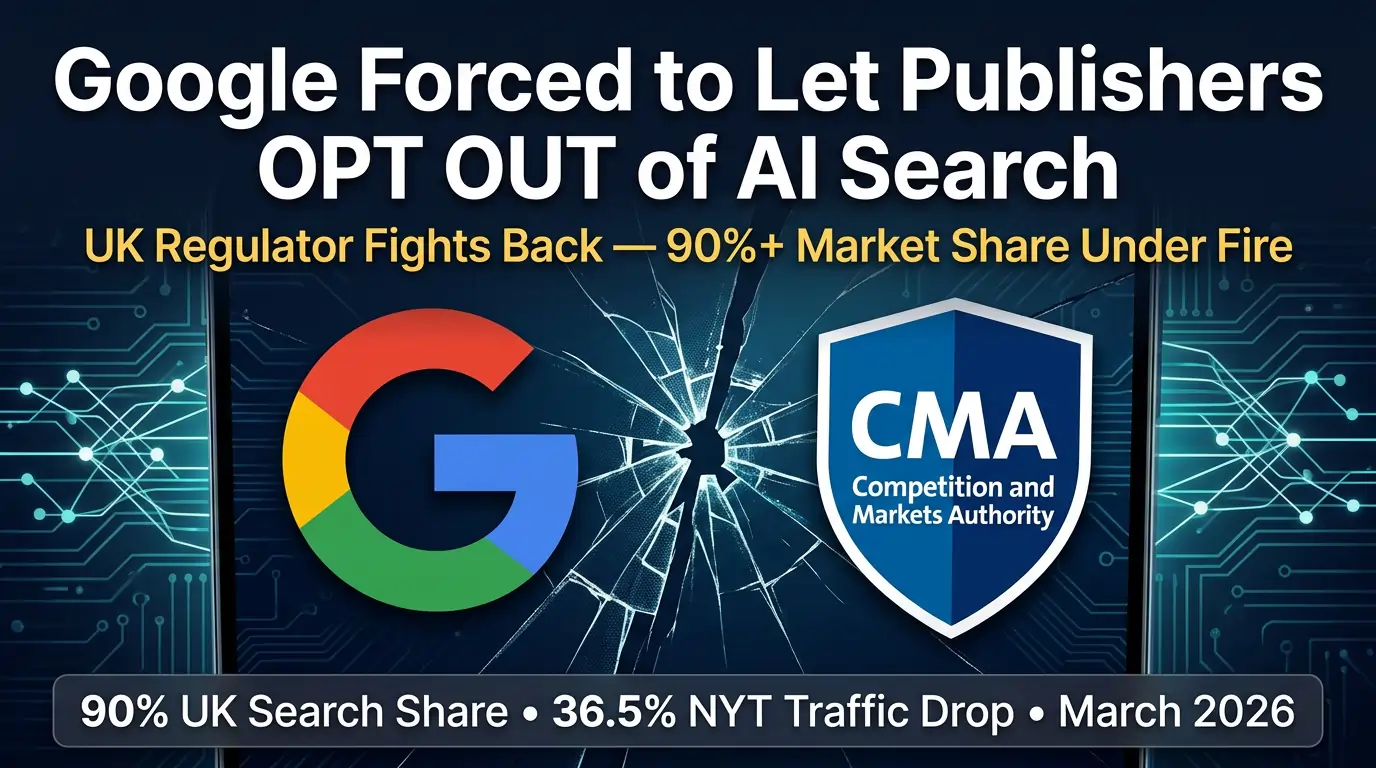
Google announced on March 18, 2026, that it is developing new search controls allowing websites to opt out of its generative AI features, a direct response to pressure from Britain's Competition and Markets Authority (CMA). The move marks one of the first concrete concessions by the company since the CMA designated it as having “strategic market status” in search services back in October 2025.
Why the CMA Came Knocking at Google's Door
Google commands more than 90% of UK search queries. It feeds content harvested by its search crawler into AI Overviews, AI Mode, and standalone products like its Gemini AI assistant. Publishers, particularly news organizations, have watched click-through rates plummet as users get AI-generated summaries instead of visiting their sites.
The CMA found that publishers “currently do not have sufficient choice” over how their content powers Google's AI responses. In January 2026, the regulator proposed a package of conduct requirements including publisher opt-outs, fair ranking rules, default search engine choice screens on Android and Chrome, and data portability measures.
Sarah Cardell, Chief Executive of the CMA, said the proposals would “give UK businesses and consumers more choice and control” over their interaction with Google's search services while “unlocking greater opportunities for innovation across the UK tech sector”.
What Google is Actually Offering
Google's March 18 response includes two key proposals. First, new controls that let websites opt out of generative AI features like AI Overviews and AI Mode without losing their position in traditional search results. Second, a “less intrusive” device settings switch to let users change their default search engine, replacing the pop-up choice screens the CMA had suggested.
The company also pushed back. In its response published on the CMA's website, Google said some proposed conduct requirements would have “disproportionate and detrimental consequences” for users, publishers, and businesses, and could harm its “ability to innovate and invest in the UK”.
Google said it would “continue to work constructively with the CMA to find practical solutions that benefit users, publishers, and businesses across the UK”.
The Publisher Squeeze That Forced This Fight
The tension behind this story has been building for over a year. A Wall Street Journal report cited by TechCrunch found that The New York Times saw organic search traffic to its desktop and mobile sites fall to 36.5% in April 2025, down from 44% three years earlier. Google Discover later added AI summaries to its news feed, further threatening publisher traffic.
Publishers had virtually no tools to resist. The existing Google Extended robots.txt control only blocked scraping by Gemini and Vertex, not AI Overviews in search. The CMA called this a “lack of clarity over the scope” that prevented publishers from making informed decisions.
Under the CMA's proposed rules, Google must not downrank publishers who opt out of AI features. It must not display their content differently in general search. And it must not attempt to acquire opted-out content through third-party scrapers.
Europe Piles On From the Other Direction
Google's UK headache is not isolated. European publishers, technology firms, and startups are pushing the European Commission to wrap up a nearly two-year antitrust probe into Google's search practices under the EU Digital Markets Act. The groups want a formal decision and a fine related to alleged self-preferencing in search results.
This regulatory pincer movement from the UK and EU puts Google's entire AI search strategy under pressure on two fronts simultaneously.
What Happens Next
The CMA's public consultation on the proposed conduct requirements closed on February 25, 2026. A final decision is expected after the regulator reviews all stakeholder feedback. Google's response signals willingness to negotiate but clear resistance to the full scope of the CMA's ambitions.
The outcome will set a template. If the UK successfully forces opt-out controls on Google's AI features without degrading search quality, other regulators will take notice. If Google's warnings about “disproportionate consequences” prove accurate, the CMA's approach could become a cautionary tale about regulating AI products in ways that hurt the people they aim to help.
FAQs
What does Google's AI opt-out mean for publishers?
Publishers will be able to prevent their content from appearing in Google's AI Overviews and AI Mode without being removed from traditional search results. This gives content creators control over how their work is used in generative AI responses.
Why did the UK CMA target Google's search services?
The CMA designated Google as having “strategic market status” in October 2025 because it controls over 90% of UK search queries. The regulator determined that publishers lacked sufficient choice over how their content powered Google's AI features.
Can Google penalize publishers who opt out of AI features?
Under the CMA's proposed rules, Google must not downrank publishers in general search results for opting out. It also cannot display their content differently or acquire their content through third-party scrapers.
How has AI Overviews affected publisher traffic?
Click-through rates to publisher websites have dropped significantly. The New York Times saw its organic search traffic share fall from 44% to 36.5% between 2022 and April 2025.
What is Google's objection to the CMA's proposals?
Google said some proposed conduct requirements would have “disproportionate and detrimental consequences” for users, publishers, and businesses, and could limit its ability to innovate and invest in the UK.
Is Google facing similar pressure in the EU?
Yes. European publishers and tech firms are urging the European Commission to conclude a nearly two-year antitrust investigation into Google's search practices under the Digital Markets Act.
Sources
Topics
Google AI Overviews
UK CMA
AI regulation
Publisher Opt-Out
Digital Markets Act
Content Licensing
Search Competition
Generative AI






Google UK AI Search Regulation
UK search
market share
Over 90%
CMA designation
date
October 2025
Conduct requirements
proposed
January 2026
Google response
date
March 18, 2026
Consultation
deadline
February 25, 2026
✉️ Daily AI Digest
Get the day's most important AI stories in one sharp email. Join 42,800+ readers.
Free forever · No spam
🔥 Trending Now